
Key Takeaways
- Plumbing Is Always Possible: You can add a full bathroom to any basement, but fighting gravity determines your system type and overall cost.
- Three Primary Options: Traditional sub-slab trenching, below-grade sewage ejector pumps, and above-floor macerating (upflush) toilets handle wastewater disposal.
- Cost Realities: Basement bathroom installation ranges from $8,000 to $25,000+, with concrete trenching adding $2,500 to $5,000 to standard labor.
- County Code Requirements: Plumbing additions require formal permits from the Baltimore County Department of Permits, Approvals and Inspections and proper vent stack tie-ins.
- Consumer Protection: Always verify your contractor holds an active license with the Maryland Home Improvement Commission (MHIC) carrying adequate liability insurance.
Can You Put a Bathroom in a Basement Without Existing Plumbing?
Yes, you can install a full bathroom in any basement even without pre-existing plumbing rough-ins. When your main sewer line sits above the basement floor grade, you must use specialized system options like sub-slab trenching, sewage ejector pumps, or upflush macerating toilets to push wastewater up to the municipal sewer pipe.
When our team walks through homes in Towson, Parkville, or Perry Hall, homeowners often assume that lacking a rough-in stub means a basement bath is off the table. That is a myth.
While upstairs bathrooms rely on simple gravity to drain waste downward, basement plumbing often works in reverse. Gravity brings water down from your sink, shower, and toilet, but getting that wastewater up into the main sewer main running through your foundation wall requires a clear mechanical plan.
Your choice comes down to three primary approaches:
- Traditional Sub-Slab Plumbing: Breaking concrete, digging trenches, laying PVC pipes, and pitching them down to a deep main line.
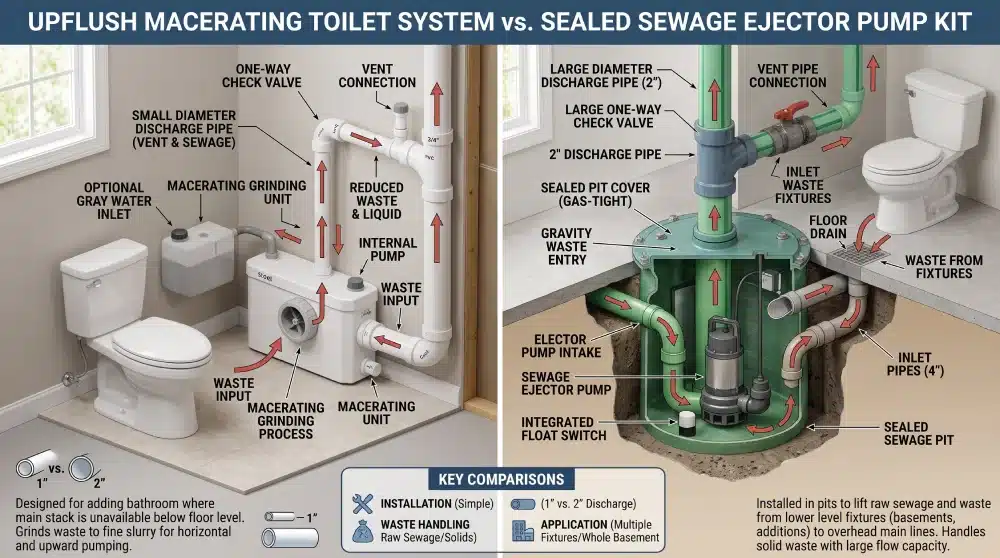
- Sewage Ejector Pump Systems: Sinking a sealed pit into the concrete slab that pumps solid and liquid waste vertically into your main drain.
- Upflush (Macerating) Toilets: Sitting directly on top of the concrete slab without jackhammering, grinding waste into a fine slurry, and pumping it upward through small-diameter pipe.
How Does Sub-Slab Plumbing Work for Basement Bathrooms?
Sub-Slab plumbing involves jackhammering through the basement concrete floor, digging trenches in the dirt underneath, laying 3-inch and 4-inch PVC drain lines at a 1/4-inch-per-foot downward slope, and pouring fresh concrete over the trench. This approach allows you to install traditional, standard plumbing fixtures that flush naturally by gravity if your main sewer exit pipe sits deeper than your basement floor.
If your home’s main sewer line leaves the house underneath the basement slab—common in newer builds in White Marsh and Nottingham—traditional sub-slab plumbing is the cleanest long-term solution.
Our field crews use commercial jackhammers to open up targeted channels in the slab. Once the dirt underneath is exposed, we dig out trenches to establish a mandatory 1/4-inch pitch per linear foot. This slope guarantees that water and waste flow without clogging.
Pros & Cons of Sub-Slab Plumbing
- Pros: Uses standard floor-mounted toilets and low-profile shower pans; zero mechanical noise; no electrical components or pumps that can fail during power outages.
- Cons: High labor costs; disruptive concrete demolition; requires structural soil compaction before repouring concrete.
How Do Sewage Ejector Pumps and Upflush Toilets Compare?
Sewage ejector pumps grind and lift wastewater from a basin buried under your slab, while upflush macerating toilets sit above the floor and grind waste directly behind the toilet. Ejector pumps handle higher volume across a full bathroom suite, whereas macerating upflush units eliminate concrete trenching entirely for tighter budgets or compact powder rooms.
When your main sewer line exits through the foundation wall two or three feet above your basement floor level, gravity needs a mechanical boost. Choosing between an ejector pit and an upflush system depends on your layout and budget.
| Feature | Sub-Slab Ejector Pump System | Above-Floor Upflush (Macerator) System |
| Concrete Demolition | Required (Jackhammering pit & short trenches) | None Required (Sits on top of slab) |
| Fixtures Handled | Full bath: toilet, vanity, shower/tub, wet bar | Toilet, vanity, and low-profile shower |
| Aesthetic / Look | Traditional (Pumps hidden beneath floor) | Exposed pump box behind toilet unit |
| Noise Level | Low (Hum enclosed inside concrete basin) | Moderate (Grinding motor activates on flush) |
| Average Installed Cost | $4,500 – $8,500 (Plumbing scope only) | $3,000 – $5,500 (Plumbing scope only) |
| Power Dependency | Requires dedicated 120V electrical circuit | Requires nearby GFCI electrical outlet |
The Mechanics of Ejector Pumps
A heavy-duty plastic or fiberglass basin is sunk beneath the concrete floor. Waste from the toilet, shower, and sink drains into the basin via gravity. When the liquid level triggers a float switch, a 1/2-HP solids-handling pump grinds waste and pushes it up a 2-inch PVC discharge pipe into your home’s main drain stack.
Per trade standards established by the International Association of Plumbing and Mechanical Officials (IAPMO), ejector basins must be fully sealed with a gasketed lid and vented directly through your roof stack to eliminate sewer gas risks.
The Mechanics of Upflush Macerators
Upflush systems (like Saniflo) sit directly on top of the concrete. Flushing triggers high-speed rotating blades that liquefy waste and toilet paper within seconds. The integrated pump forces the slurry upward through a slender 3/4-inch or 1-inch pipe running up to the overhead sewer line.
What Key Factors Impact the Cost of Adding a Basement Bathroom in Maryland?
The primary cost drivers for a Maryland basement bathroom are concrete demolition, plumbing strategy, electrical updates, and local permit fees. Total costs range from $8,000 for a basic powder room using upflush technology to $25,000+ for a luxury full bath with custom tile work and a sub-slab ejector system.
When budgeting for basement updates in older homes across Rosedale or Parkville, our master tradespeople advise homeowners to consider four critical elements:
1. Concrete Trenching and Slab Removal
Cutting concrete adds $2,500 to $5,000 in specialized labor and equipment rental. If your basement slab is extra thick or reinforced with wire mesh, demolition takes longer.
2. Plumbing Venting Lines
Every fixture requires proper air venting to prevent trap siphonage and sewer gas buildup inside the home. Tying a new basement vent line into your home’s existing roof stack often involves running pipe up through closet spaces or interior walls across upper floors.
3. Electrical Upgrades & Dedicated Circuits
Pumps require dedicated electrical circuits to prevent breaker trips. Maryland electrical codes require GFCI protection and dedicated breakers for sewage ejectors. If your existing electrical panel is full, adding a subpanel or upgrading service capacity adds to the final scope.
4. Moisture Management and Backwater Valves
Maryland experiences heavy seasonal rains and humid weather. Installing a sewer backwater valve prevents municipal main backups from flooding your new basement bath.
If you are finishing your entire lower level alongside a bath installation, partnering with experienced builders for home additions or full basement finishes ensures mechanical efficiency.
What Are the Permitting Realities for Basement Bathrooms in Baltimore County?
All basement bathroom additions in Baltimore County legally require trade permits for plumbing, electrical work, and structural alterations. Unpermitted basement plumbing can void home insurance coverage for water damage, fail home inspections during resale, and trigger code enforcement fines.
Hiring top-rated local contractors in Perry Hall or licensed builders serving Towson ensures your project fully complies with current building codes:
- Plumbing Inspections: Mandatory rough-in inspections evaluate drain pipe pitch, vent stack connections, and 10-foot water head pressure tests before trenches are closed.
- MHIC Contractor Standards: Under regulations set by the Maryland Home Improvement Commission (MHIC), licensed contractors must provide written contracts detailing scopes, material specs, and permit fees.
- Drainage Codes: Guidelines from the National Association of the Remodeling Industry (NARI) stress that pump systems must use check valves to prevent pumped wastewater from flowing back into the basin.
Combining your project with other home improvements—such as an overall main-floor kitchen remodeling project, a hall bathroom remodeling update, or structural exterior roofing work—lets you streamline permit filings and lower total management costs.
Frequently Asked Questions About Basement Bathroom Plumbing
Can you put a shower in a basement with an upflush toilet?
Yes, most macerating upflush systems include side inlets that accept drain lines from a bathroom sink and a shower. The shower pan must be elevated on a 6-inch raised platform so water can drain into the side of the macerator pump unit via gravity.
How long do sewage ejector pumps last in basement bathrooms?
A quality sewage ejector pump lasts between 7 and 10 years with normal residential use. Replacing a worn pump is straightforward because the subterranean basin and discharge piping remain intact.
Do upflush toilets smell?
No, sealed upflush systems do not emit odors when installed and vented according to manufacturer specifications. Mechanical check valves prevent gases from escaping back into the bathroom.
How loud is a sewage ejector pump or upflush toilet?
Modern sewage ejector pumps make a low hum similar to a washing machine, while upflush macerators sound like a garbage disposal for 10 to 15 seconds per flush. Sub-slab ejectors are quieter because the pump is submerged underwater inside a concrete basin.
What happens to a basement ejector pump during a power outage?
Standard electric ejector pumps will not run during a power outage. Homeowners can install battery-backup pump systems or power the unit via a home generator to prevent overflow risks during storms.
How far can an upflush toilet pump wastewater vertically?
Most residential upflush macerator pumps can lift wastewater 12 to 15 feet vertically and pump up to 150 feet horizontally. This provides more than enough pumping distance to reach main drain lines in standard residential basements.
Do I need a permit to put a bathroom in my basement in Towson or Parkville?
Yes, Baltimore County requires official plumbing and electrical trade permits for any new bathroom installation. Working without permits creates major closing hurdles when selling your home.
Why do basement showers require an elevated pan with upflush systems?
Upflush pump inlets sit a few inches off the floor, so showers need a raised platform to create gravity drainage into the pump. Building a 6-inch platform allows water to flow smoothly out of the shower drain.
Can you flush wipes or paper towels down a basement upflush toilet?
No, you should never flush baby wipes, paper towels, or feminine products down a macerating toilet or ejector pump. Non-degradable items wrap around the rotating cutter blades, jamming the motor and causing pump failure.
How much value does a basement bathroom add to a home?
Adding a full basement bathroom yields a 60% to 70% return on investment at resale while significantly increasing finished square footage usability. Buyers in competitive markets prioritize homes with finished basements that include dedicated bathrooms.
Ready to Add a Basement Bathroom to Your Maryland Home?
If you live in Nottingham, Perry Hall, White Marsh, Rosedale, Parkville, or Towson, don’t let plumbing questions hold back your basement transformation. Work with master tradespeople who understand sub-slab mechanics, regional building codes, and clean installation practices.
At Genesis Contracting, we handle every phase of construction—from concrete trenching and rough-in trades to tile finishing and final trade permits.