
As autumn temperatures begin to drop across the Greater Baltimore Area, homeowners routinely turn their attention toward improving interior comfort. The primary bathroom, often serving as a central space for morning and evening routines, becomes a major focal point for seasonal upgrades. In established communities throughout Nottingham, Perry Hall, and Towson, property owners are increasingly seeking design elements that provide physical warmth and elevated comfort. Planning a targeted renovation during October allows homeowners to create an inviting indoor retreat before winter weather arrives.
The existing housing stock across Baltimore County features a median age exceeding forty years. Many master bathrooms built during the late twentieth century rely on outdated plumbing fixtures, insufficient heating, and cold tile surfaces. Modernizing these spaces through comprehensive [bathroom remodeling](Insert Genesis URL) services addresses both functional inefficiency and aesthetic obsolescence. Strategic autumn upgrades historically increase property value while significantly enhancing daily residential utility.
Climate Dynamics and the Desire for Thermal Comfort
Seasonal climate shifts in Maryland play a direct role in residential remodeling decisions during the fourth quarter. Data published by the Maryland State Climatologist Office demonstrates that average daily temperatures in the Baltimore region decrease rapidly between October and December. Cold ceramic floor tiles and drafty spatial configurations become particularly noticeable during these cooler months. Consequently, interior projects that integrate active and passive heating elements experience high consumer demand during late autumn.
Creating a warm and luxurious master suite involves more than increasing the central thermostat setting. Incorporating specialized thermal features allows homeowners to heat targeted areas efficiently without overworking the primary furnace. Furthermore, selecting materials with high thermal resistance helps maintain comfortable ambient temperatures throughout the winter season.
Key Design Elements for Fall 2026
The design trends for late 2026 emphasize a shift away from clinical, monochromatic white finishes in favor of rich, organic textures and built in warming features. Homeowners undertaking a [master bathroom renovation](Insert Genesis URL) are prioritizing materials that evoke tranquility and physical comfort. The following upgrades represent the most sought after enhancements for the current season.
Electric Radiant Heated Flooring
Walking onto cold tile floors during a Maryland winter is a frequent complaint among local homeowners. Installing an electric radiant heating mat directly beneath newly laid tile provides uniform, radiant warmth across the entire floor surface. This system operates on a programmable thermostat, allowing property owners to schedule heating cycles for maximum energy efficiency.
- Radiant floor heating eliminates cold spots across natural stone or porcelain tile.
- System operation requires minimal electricity compared to running supplemental space heaters.
- Integrating electric heating mats increases overall floor assembly height by less than half an inch.
Warm Wood Vanities and Natural Materials
Incorporating natural wood tones introduces visual warmth that balances cold plumbing fixtures and glass shower enclosures. Midcentury inspired walnut, rift sawn oak, and warm chestnut vanities are replacing painted white cabinetry in modern bathroom designs. Sealing natural wood with high performance polyurethane coatings prevents moisture absorption while preserving the organic grain patterns.
Deep Freestanding Soaking Tubs
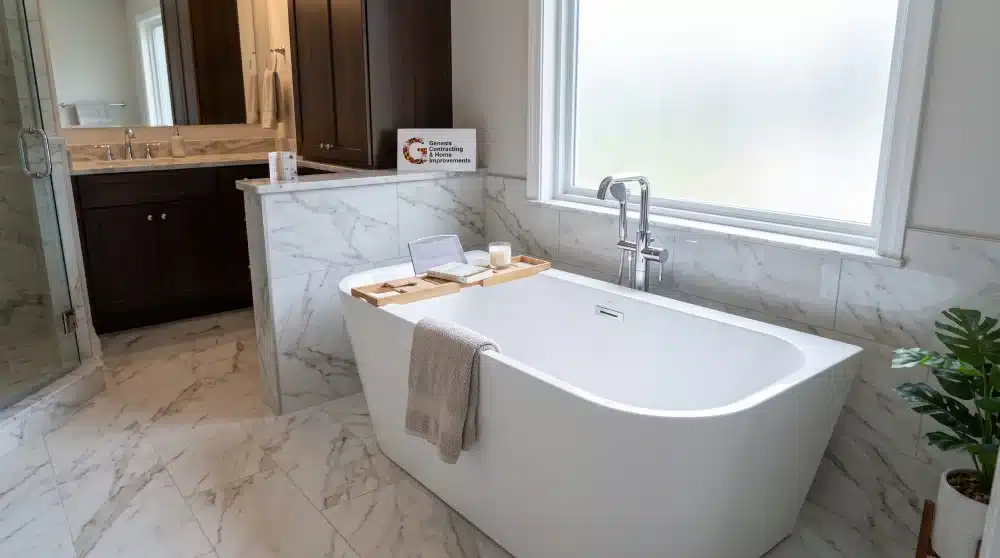
Replacing traditional shallow tub shower combinations with dedicated soaking tubs remains a top priority for luxury master suites. Modern acrylic and composite stone freestanding tubs feature superior insulation properties that retain water heat for extended periods. Positioning a freestanding tub near an insulated exterior wall creates an elegant focal point while providing therapeutic relaxation during cold winter evenings.
Thermostatic Walk In Showers
Upgrading to a walk in shower featuring multiple showerheads and thermostatic mixing valves ensures consistent water temperature control. Thermostatic valves maintain a precise water temperature even when other plumbing appliances operate elsewhere in the residence. Incorporating a built in tiled bench and frameless heavy glass enclosure creates a steam retention environment that maximizes personal comfort.
Financial Analysis and Resale Expectations in Maryland
Investments in primary suite bath modernizations represent a significant financial decision for homeowners. According to empirical data in the regional Cost versus Value Report for the South Atlantic division, midrange and upscale bathroom remodels historically yield a solid financial return upon resale. Upgrading worn fixtures and expanding shower dimensions generally enhance property marketability in competitive real estate sectors.
Homebuyers in affluent areas like Towson and Howard County frequently expect modern, spa inspired amenities when viewing premium property listings. A renovated primary bath serves as a strong selling point that can shorten overall market duration during real estate transactions. Property owners who execute high quality renovations enjoy immediate lifestyle benefits while preserving long term equity.
Permits, Electrical Capacity, and Construction Timelines
Executing a complex bathroom renovation requires strict adherence to local building and trade codes. The Baltimore County Department of Permits enforces strict regulations governing electrical modifications and plumbing stack alterations. Adding radiant floor heating or dedicated high capacity shower pumps requires formal plan reviews and mandatory municipal inspections.
- Electrical permits ensure that new heating elements comply with local amperage limits and safety codes.
- Plumbing permits verify that drain lines and vent pipes are sized correctly to handle increased water volume.
- County administrative processing for residential trade permits generally requires ten to fifteen business days.
Due to the specialized nature of these trade installations, executing a major bathroom overhaul typically requires a active construction timeline of four to six weeks. Homeowners who initiate design planning and material orders in early October position their projects for completion before end of year holiday festivities begin. To discuss specific layout ideas and review material choices with an experienced project manager, please [Contact Us](Insert Genesis URL) to schedule an initial consultation.
Disclaimer: The renovation timelines, estimated costs, and real estate return on investment figures discussed in this article vary significantly based on individual property conditions, local market fluctuations, and supply chain availability. This article is provided strictly for informational purposes. Homeowners should consult directly with licensed professionals to obtain accurate assessments and estimates for their specific residential properties.