
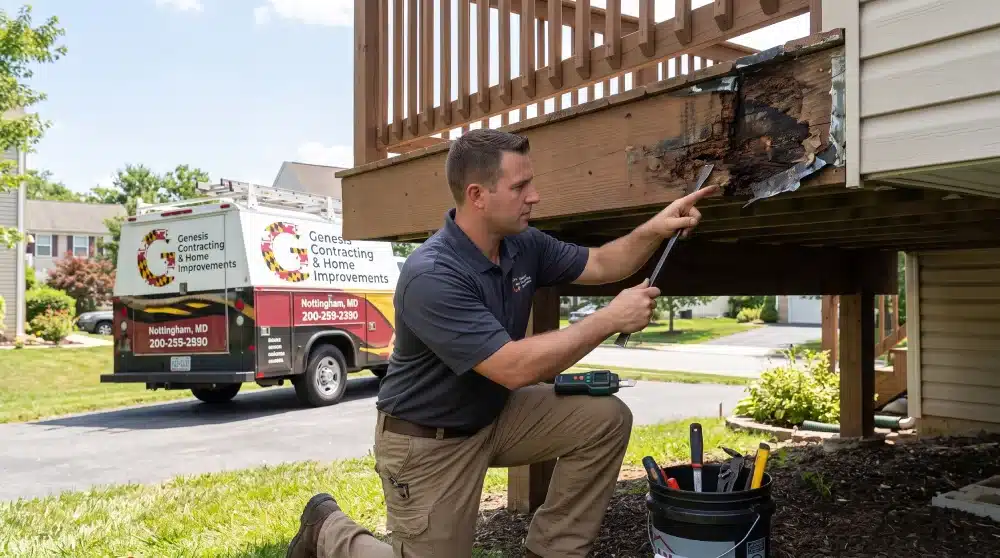
As the autumn season progresses in the Greater Baltimore Area, property owners must assess the condition of their exterior structures before freezing temperatures arrive. Homes in Nottingham, Perry Hall, and White Marsh experience significant temperature fluctuations throughout the year. These seasonal changes place immense stress on exterior woodwork and fastening systems. October offers a strategic opportunity to evaluate summer wear and tear before severe weather patterns complicate outdoor construction projects.
The decision between executing minor repairs and commissioning a complete structural replacement requires careful evaluation. According to local real estate data, the median age of housing stock in Baltimore County exceeds forty years. Many existing decks were constructed using early generation pressure treated lumber that has exceeded its functional lifespan. Engaging professional [deck installation](Insert Genesis URL) experts during the fall ensures that any necessary structural remediation occurs before the ground freezes solid.
The Impact of Maryland Winters on Exterior Structures
The local climate presents specific challenges for outdoor timber structures. Data published by the Maryland State Climatologist Office indicates that the Baltimore region experiences an average annual snowfall of approximately nineteen inches. This accumulation introduces substantial weight loads and prolonged moisture exposure to horizontal surfaces. When snow melts during daylight hours and refreezes overnight, the resulting ice expansion rapidly accelerates wood deterioration.
October in Baltimore County typically features mild temperatures and lower humidity levels. These atmospheric conditions create an ideal environment for pouring concrete footings and allowing timber treatments to cure properly. Once November arrives, the frequency of freezing precipitation increases, which effectively halts exterior excavation work.
Moisture penetration is the primary cause of structural rot in timber framing. As water seeps into unprotected wood grain, it compromises the cellular structure of the lumber. This process significantly reduces the load bearing capacity of the platform and creates serious safety liabilities for homeowners. Proactive maintenance and timely evaluations minimize the risk of catastrophic failure during heavy winter precipitation events.
Identifying Cosmetic Issues versus Structural Failure
Differentiating between superficial damage and fundamental structural weakness is critical for property safety and financial planning. Cosmetic issues generally involve the surface appearance of the floorboards or railing balusters. Minor splintering, faded stain, and surface level mold are typical maintenance concerns that do not necessarily require full demolition. Homeowners can often address these minor defects through routine sanding and seasonal sealing applications.
Conversely, structural failure originates within the hidden framing components beneath the floorboards. The ledger board, which connects the outdoor platform directly to the house, is a frequent point of critical failure. If water infiltrates behind the ledger board due to improper flashing, it can rot the rim joist of the primary residence. Indicators of severe structural degradation include:
- Spongy or yielding floorboards that flex excessively under normal foot traffic.
- Visible rot or fungal growth on the primary support posts and horizontal joists.
- Corroded metal fasteners, joist hangers, and lag screws that lack structural integrity.
- A noticeable sway or lack of rigidity when walking across the platform surface.
When an inspection reveals compromised support posts or severe ledger board rot, a complete [deck replacement](Insert Genesis URL) is the standard professional recommendation. Attempting to attach new surface boards to a rotting foundation ultimately wastes capital and ignores underlying safety hazards.
Navigating Baltimore County Permit Requirements
Executing a full replacement involves strict adherence to local building codes and municipal regulations. The Baltimore County Department of Permits mandates a formal application and site plan for any outdoor platform exceeding one hundred twenty square feet or positioned more than sixteen inches above the lowest grade. These regulations exist to ensure that new structures meet modern safety standards regarding weight capacity and frost line footing depth.
The frost line in Baltimore County dictates how deep foundation footings must be poured. When the ground freezes, soil expansion causes shallow footings to heave upward. This subterranean movement warps the entire wooden structure above ground. Securing permits and scheduling concrete pours during the mild October weather avoids these freezing complications completely.
Administrative processing times vary based on seasonal application volume. During the autumn months, initial review periods typically span up to fifteen business days. Starting the planning phase in October provides ample time to secure necessary approvals before the frost line prevents proper footing excavation.
Material Selection and Return on Investment
Selecting appropriate materials heavily influences both the project timeline and the long term financial return. Modern decking materials generally fall into two primary categories: traditional pressure treated lumber and engineered composite boards. Pressure treated pine requires a lower initial capital investment but demands rigorous annual maintenance to prevent water intrusion.
Engineered composite materials require a higher upfront investment but eliminate the need for annual sanding and chemical sealing. According to the regional statistics in the annual Cost versus Value Report, composite decking additions in the South Atlantic region historically recoup nearly seventy percent of their cost at resale. Furthermore, composite boards resist the moisture absorption and thermal expansion cycles that destroy traditional timber during Maryland winters.
Traditional wood platforms nationally recouped over eighty percent of their cost during real estate transactions in recent years. While composite materials return a slightly lower percentage at the time of sale, they provide significant lifestyle benefits by eliminating weekend maintenance chores. Buyers in affluent neighborhoods like Towson and White Marsh frequently expect low maintenance exterior amenities when evaluating premium real estate listings.
Planning Your Autumn Evaluation
Property owners should prioritize exterior structural evaluations prior to the arrival of sustained freezing temperatures. Identifying and addressing compromised structural elements proactively prevents minor rot from evolving into severe property damage. Delaying necessary replacements until the spring season often results in higher material costs and extensive scheduling delays due to peak market demand.
Professionals equipped with proper diagnostic tools can accurately assess the structural integrity of existing support posts and ledger board connections. If you suspect that your outdoor platform requires professional attention before winter weather arrives, please [Contact Us](Insert Genesis URL) to schedule a comprehensive property evaluation. Addressing these concerns today ensures a safe and functional outdoor living space for the upcoming year.
Disclaimer: The renovation timelines, estimated costs, and real estate return on investment figures discussed in this article vary significantly based on individual property conditions, local market fluctuations, and supply chain availability. This article is provided strictly for informational purposes. Homeowners should consult directly with licensed professionals to obtain accurate assessments and estimates for their specific residential properties.