
Key Takeaways
- Average Maryland Spend: Most kitchen remodels in Baltimore County range from $15,000 to $120,000+, with the typical mid-range project landing between $35,000 and $80,000.
- Primary Cost Driver: Cabinetry is your single largest line item, absorbing 30% to 40% of your total project budget.
- Resale ROI: According to regional remodeling data, a mid-range kitchen overhaul in Maryland recoups 60% to 75% of its cost at resale.
- Permitting Realities: Layout alterations, electrical updates, or new gas plumbing require formal permits from the Baltimore County Department of Permits, Approvals and Inspections.
- Protection First: Always confirm your contractor holds an active license with the Maryland Home Improvement Commission (MHIC) carrying at least $500,000 in general liability insurance.
What Is the Average Cost of a Kitchen Remodel in Maryland?
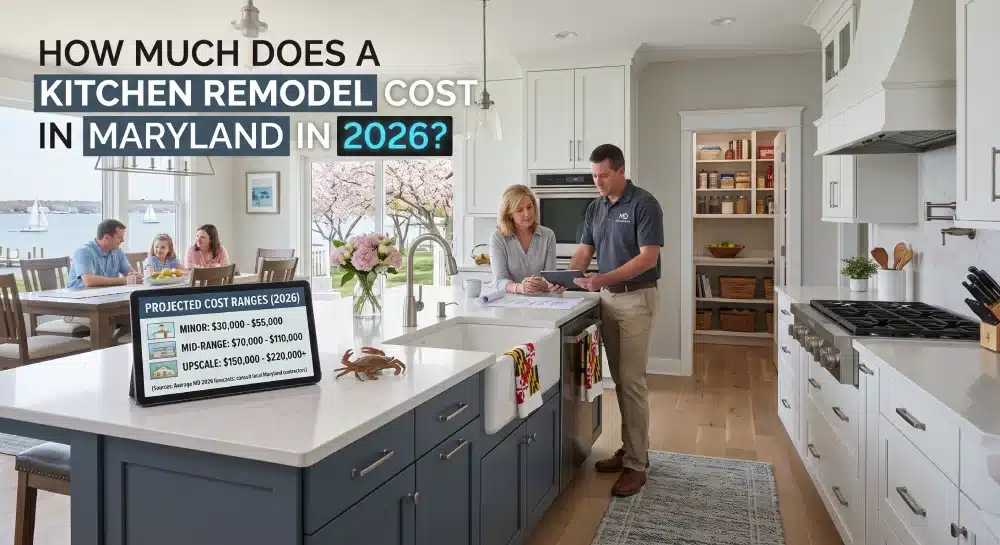
A typical kitchen remodel in Maryland costs between $15,000 and $120,000+, depending on room size, material grades, and floor plan modifications. Minor cosmetic refreshes average $15,000 to $30,000, mid-range full-replacement jobs land between $35,000 and $80,000, and high-end luxury transformations start at $85,000+. Local labor rates and permitting fees across Baltimore County make exact numbers project-specific.
When our team sits down with homeowners in Towson or Perry Hall, the first question is always about the bottom line. National averages on home improvement sites rarely tell the whole story. Maryland’s construction market, trade labor costs, and county code requirements create a distinct pricing baseline.
Here is how real project budgets break down across three typical tiers:
1. Cosmetic Refresh ($15,000 – $30,000)
This tier preserves your existing layout, plumbing lines, and electrical boxes.
- Cabinetry: Professional cabinet refinishing, repainting, or re-facing existing boxes with new solid wood doors.
- Countertops: Entry-to-mid-grade quartz, granite, or solid surface materials.
- Fixtures & Hardware: Upgraded pull-down faucet, stainless steel undermount sink, and matte black or brushed brass hardware.
- Lighting & Backsplash: Subway tile backsplash, fresh paint, and updated LED surface lighting.
2. Mid-Range “Pull-and-Replace” ($35,000 – $80,000)
This is the most common renovation our field crews handle in suburban neighborhoods like White Marsh and Nottingham.
- Cabinetry: All-new semi-custom plywood box cabinets with soft-close drawers and pull-out pantry organizers.
- Countertops: Durable, non-porous engineered quartz countertops.
- Appliances: Complete energy-efficient stainless steel appliance package.
- Flooring: Commercial-grade Waterproof Luxury Vinyl Plank (LVP) or porcelain floor tile.
- Layout: Minor plumbing or electrical repositioning without structural wall demolition.
3. High-End Custom Gut Renovation ($85,000 – $130,000+)
Designed for major transformations, open-concept living, and chef-level performance.
- Cabinetry: Fully custom inset hardwood cabinetry with integrated appliance paneling and bespoke storage.
- Countertops: Premium natural quartzite or thick-edge book-matched quartz slabs.
- Structural: Removing load-bearing walls to open the kitchen into living areas (requires structural engineering and headers).
- Appliances: Commercial-tier appliance suites (Sub-Zero, Wolf, or Thermador).
- Mechanicals: Complete rewiring, plumbing relocation, and dedicated HVAC duct additions.
How Is a Maryland Kitchen Remodel Budget Allocated?
Your kitchen remodeling budget is split among six core categories, with cabinetry and labor consuming over two-thirds of total costs. Cabinetry accounts for 30% to 40%, trade labor and installation take 25% to 35%, and countertops make up 10% to 15%. Appliances, flooring, and permit fees round out the remaining percentage.
Understanding where every dollar goes helps you prioritize spending without sacrificing structural quality or durability.
| Budget Line Item | Percentage of Total Budget | Cost Range (Mid-Range $60k Budget) |
| Cabinetry | 30% – 40% | $18,000 – $24,000 |
| Labor & Installation | 25% – 35% | $15,000 – $21,000 |
| Countertops | 10% – 15% | $6,000 – $9,000 |
| Appliances | 10% – 15% | $6,000 – $9,000 |
| Flooring & Backsplash | 7% – 10% | $4,200 – $6,000 |
| Permits & Design | 3% – 5% | $1,800 – $3,000 |
Where the Money Goes
- Cabinetry (30%–40%): Stock box cabinets from big-box stores cost less up front but use particle board that can swell under kitchen moisture. Our master tradespeople recommend semi-custom plywood boxes that withstand high humidity and heavy daily use.
- Labor & Specialized Trades (25%–35%): Kitchens require licensed plumbers, master electricians, tile setters, and finish carpenters. Quality trade labor ensures your home meets current electrical safety codes.
- Countertops (10%–15%): Engineered quartz remains the top recommendation from the National Kitchen & Bath Association (NKBA) because it never requires sealing and resists staining.
- Appliances (10%–15%): Upgrading from standard builder models to dual-fuel ranges or cabinet-depth refrigeration boosts both everyday function and resale value.
- Flooring & Backsplash (7%–10%): Maryland’s seasonal freeze-thaw cycles and humid summers cause natural wood floor expansion. High-grade LVP or sealed tile provides superior moisture resistance.
- Permits & Plans (3%–5%): Structural shifts, new electrical runs, or gas line modifications legally require Baltimore County trade permits.
What Key Factors Drive Kitchen Remodeling Costs in Baltimore County?
The three biggest cost drivers in local kitchen remodels are floor plan changes, material choices, and home age. Relocating sinks or gas lines adds thousands in trade labor, while selecting custom inset cabinets doubles your millwork budget. Older homes in areas like Parkville or Rosedale often require electrical panel upgrades to meet modern code.
When evaluating homes in Parkville, Rosedale, or older sections of Towson, our field crews regularly uncover specific local factors that influence construction costs:
1. Moving Plumbing, Gas, or Electrical Lines
Keeping your sink, stove, and refrigerator in their original footprint saves significantly on labor. Once you shift a sink to an island or move a gas range across the room, licensed trades must open floors and walls to re-route drain lines, vent stacks, and gas feeds.
2. Structural Wall Removal
Opening up a closed galley kitchen to create a bright, open space is a popular choice across Maryland homes. However, removing a load-bearing wall requires installing an engineered LVL (Laminated Veneer Lumber) or steel beam overhead. This structural modification requires engineering calculations and building permits.
3. Electrical Panel Capacity
Modern kitchens run high-draw appliances: induction cooktops, wall ovens, built-in microwaves, and wine chillers. Older 100-amp electrical panels common in 1950s–1970s homes across Parkville or Rosedale frequently need upgrading to 200-amp service to safely support these additions and meet National Electrical Code (NEC) standards.
4. Regional Material Preferences
Maryland’s summer humidity and winter temperature swings demand stable building materials. Solid hardwood floors can warp near sinks, making waterproof LVP or stone-look porcelain tile a more stable long-term choice. Similarly, quartz countertops outperform natural marble in kitchen environments due to superior stain resistance.
What Is the ROI on a Kitchen Remodel in Maryland?
A mid-range kitchen remodel in Maryland yields a strong return on investment, recovering between 60% and 75% of costs at resale. Smaller cosmetic refreshes can recoup up to 75% to 80%, making kitchen updates one of the top home improvements for building equity.
According to industry data published by Remodeling Magazine’s Cost vs. Value Report and research from the National Association of the Remodeling Industry (NARI), kitchens remain the primary room buyers evaluate when shopping for a home.
Average Maryland Resale Cost Recovery by Project Scope:
| Project Scope | Estimated ROI |
| Minor Cosmetic Refresh | 75% – 80% ROI |
| Mid-Range Pull-and-Replace | 60% – 75% ROI |
| High-End Custom Renovation | 50% – 60% ROI |
In competitive Baltimore County housing markets—such as Towson, Perry Hall, and White Marsh—an outdated, dysfunctional kitchen can lead to extended market times or price reductions. Buyers often over-estimate the cost of doing renovations themselves, making a newly remodeled kitchen a major selling advantage.
If you plan to live in your home for 5 to 10 years, the return comes in two forms: daily functional enjoyment and sustained home value protection.
How Can Maryland Homeowners Avoid Budget Overruns?
You can prevent cost overruns by establishing a clear scope of work before demolition and reserving a 10% to 15% contingency fund for unexpected issues. Hidden water damage, outdated wiring behind plaster, or non-code framing are common discoveries in older homes. Partnering with a licensed general contractor who provides detailed written scopes helps keep projects on budget.
Our team recommends four practical steps to protect your budget during a renovation:
- Establish a 10% to 15% Contingency Buffer: Never allocate 100% of your available funds to visible fixtures. Set aside a cushion for hidden discoveries like uninsulated rim joists or subfloor rot around old dishwasher lines.
- Lock In Design Choices Early: Mid-project scope changes (“change orders”) cause construction delays and increase labor costs. Finalize cabinet layouts, appliance dimensions, and tile selections before work begins.
- Verify MHIC Licensing and Insurance: Maryland law requires home improvement contractors to maintain an active MHIC license and $500,000 in liability coverage. Hiring uninsured or uncredentialed labor leaves you financially vulnerable if damage or injuries occur.
- Bundle Related Home Projects: If your kitchen shares exterior walls that need new siding, or if your roof is aging overhead, combining work with expert roofing specialists or adding nearby home additions can reduce setup fees and trade mobilization costs.
Frequently Asked Questions About Maryland Kitchen Remodeling
How long does a typical kitchen remodel take from start to finish?
A standard mid-range kitchen remodel takes between 6 and 10 weeks of active construction time once materials arrive. Minor cosmetic updates may take only 3 to 4 weeks, whereas complex custom renovations involving structural load-bearing wall removal can take 12 to 16 weeks.
Do I need a permit to remodel my kitchen in Baltimore County?
Yes, permits are legally required whenever you alter plumbing, electrical wiring, gas supply lines, or structural framing. Simple cosmetic work like repainting or changing cabinet handles does not require a permit, but major work must be filed with the Baltimore County Department of Permits, Approvals and Inspections.
Should I replace or refinish my kitchen cabinets?
Refinishing or re-facing makes sense if your existing cabinet boxes are sturdy plywood and you like your current layout. If your cabinets are particle board, water-damaged, or inefficiently arranged, replacing them with new semi-custom units delivers far better long-term value.
What is the best kitchen flooring for Maryland homes?
Waterproof Luxury Vinyl Plank (LVP) and porcelain tile are top choices due to their resistance to water, scratches, and temperature changes. Engineered hardwood is also a solid choice, though it requires prompt cleanup of spills compared to LVP.
How much value does a kitchen island add?
A well-designed kitchen island adds significant value by increasing countertop workspace, storage capacity, and seating. Adding an island typically costs $2,500 to $7,500 depending on size, cabinetry grade, quartz tops, and whether electrical outlets or plumbing are integrated.
Can I live in my home during a kitchen renovation?
Yes, most homeowners remain in their homes by setting up a temporary kitchen area with a microwave, mini-fridge, and toaster oven. Our field crews work to isolate dust and keep job sites clean, but expect 4 to 8 weeks without a functional sink or range.
Which kitchen improvements offer the highest return on investment?
Upgrading dated cabinets, installing durable quartz countertops, and adding modern energy-efficient lighting yield the highest ROI. These visual upgrades transform the space without requiring costly structural shifts.
What is the difference between stock, semi-custom, and custom cabinets?
Stock cabinets come in fixed 3-inch increments with limited finishes, while semi-custom offers modified depths, custom doors, and flexible sizing. Custom cabinetry is built entirely to order out of solid hardwoods to fit any exact dimension or unique design vision.
How do I verify if my contractor is properly licensed in Maryland?
You can verify any contractor’s standing directly on the official Maryland Home Improvement Commission (MHIC) public database. Never hire a contractor who cannot produce their active MHIC license number and proof of liability insurance.
What other home upgrades pair well with a kitchen remodel?
Many homeowners update adjacent spaces at the same time, such as upgrading a nearby main-floor bathroom or expanding living spaces. Coordinating a bathroom remodeling project or building outdoor living spaces like custom decks while trades are already on site saves on total project overhead.
Ready to Plan Your Dream Kitchen with Baltimore County’s Local Experts?
If you are considering a kitchen renovation in Nottingham, Perry Hall, White Marsh, Rosedale, Parkville, or Towson, work with a team that knows local building codes, trade standards, and neighborhood home values inside and out.
At Genesis Contracting, our master tradespeople deliver precise craftsmanship, clear pricing breakdowns, and dedicated project management from initial design to final cleanup.