
Key Takeaways
- Grout Line Minimization: Continuous quartz slab backsplashes and large-format porcelain reduce grout maintenance while providing a clean, modern aesthetic that resists grease and moisture.
- Texture Over High Contrast: Hand-crafted Zellige and subway tiles with subtle edge variation deliver visual depth that outlasts short-lived color trends.
- Pattern Longevity: Classic layouts like 50/50 running bond and 45-degree herringbone retain resale value far better than busy multi-colored mosaic glass sheets.
- Architectural Alignment: Tailoring backsplash choices to regional architecture—such as traditional Towson colonials or classic Perry Hall ranches—protects long-term home value.
- Moisture Protection: Proper waterproofing with ANSI-compliant TCNA substrates behind kitchen sink zones prevents hidden drywall rot from Maryland’s humid seasonal cycles.
What Tile Backsplash Styles Are Truly Timeless for Maryland Homes?
Classical white or warm-neutral subway tile, hand-crafted ceramic tile with soft edge texture, and continuous solid quartz slabs offer the most timeless appeal. These selections provide clean sightlines, easy maintenance, and neutral backdrops that complement evolving interior decor for decades.
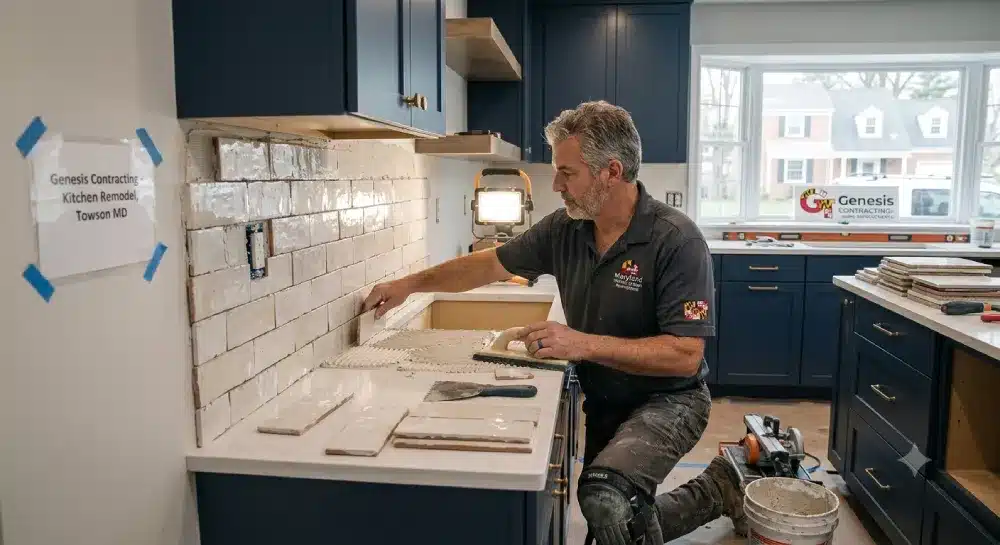
When our field crews walk through kitchen remodels in Towson and Nottingham, we often tear out mid-2000s accent strips and multi-color glass mosaics that aged poorly. Homeowners spent thousands on those trendy focal points, only to feel trapped by loud patterns five years later. According to design research from the National Kitchen & Bath Association (NKBA), over 80% of remodeling designers now prioritize low-maintenance, quiet neutrals and natural textures that preserve resale value.
| BACKSPLASH STYLE LONGEVITY MATRIX | ||
|---|---|---|
| HIGH TIMELESSNESS (15+ Yrs) | MID-RANGE APPEAL (7-10 Yrs) | SHORT FAD |
| Solid Quartz Slab | Matte Cement Tile | Glass Mosaic Strips |
| 3×6 Ceramic Subway Tile | Bold Geometric Encaustic | |
| Hand-Crafted Zellige Tile | Metallic Sheet Inlays | |
When evaluating a ceramic tile backsplash in Nottingham or an upgrade in Perry Hall, our master tradespeople advise keeping these core principles in mind:
- Subtle Textual Variation: Instead of relying on contrasting colors, opt for glaze variation. Hand-crafted glazed ceramic tiles (like Zellige or artisan-cut subway tiles) catch natural sunlight without cluttering the wall visually.
- Neutral Palette with Depth: Warm whites, soft greys, cream, and sage green harmonize naturally with solid wood cabinetry and natural stone counters.
- Proportional Scale: Standard 3×6-inch or oversized 4×12-inch tiles suit almost every wall height, keeping focal lines balanced above cooktops.
If you are planning a full kitchen overhaul, explore our complete Kitchen Remodeling service options to see how layout, cabinetry, and tile work together.
How Do You Match a Backsplash to Colonial, Craftsman, or Ranch Architecture in Baltimore County?
Matching a backsplash to local architecture requires pulling design cues from your home’s trim, cabinetry, and historical era. Traditional colonials suit classic running-bond subway tile, Craftsman homes thrive with earth-toned artisan ceramics, and mid-century ranches pair best with stacked vertical tile or clean quartz slabs.
A common mistake we see across Parkville and Rosedale is putting high-gloss modern linear tiles into a 1950s traditional brick colonial. It creates a visual clash that confuses prospective buyers during open houses.
| LOCAL ARCHITECTURAL MATCHING GUIDE | |
|---|---|
| COLONIAL (Towson / Parkville) | 3×6 Beveled Subway Tile or 45-Degree Herringbone Layout |
| CRAFTSMAN (White Marsh) | Matte Hand-Crafted Ceramic in Warm Sage, Earthy Clay, or Cream |
| RANCH & SPLIT-LEVEL (Perry Hall / Rosedale / Nottingham) | Vertical Stacked Ceramic or Continuous Quartz Slab |
Here is how our field team aligns timeless kitchen design in Perry Hall and surrounding areas with classic home styles:
- Towson Colonials: Stick with symmetrical patterns. A 3×6-inch glazed subway tile in a 50/50 running bond or a focal herringbone panel behind the range adds elegance while respecting historic architecture.
- White Marsh Craftsman Homes: Embrace organic warmth. Earthy tones, matte finishes, and subtle hand-glazed edges highlight the custom woodwork typical of Craftsman interiors.
- Rosedale & Parkville Ranches: Keep horizontal lines long and clean. Straight-stacked subway tiles or large-format 12×24-inch porcelain tiles visually stretch narrow kitchen walls.
Looking to update adjacent spaces along with your kitchen? Check out our custom Bathroom Remodeling solutions to create consistent tile craftsmanship throughout your home.
Is a Continuous Quartz Slab Backsplash Better Than Individual Tile for Resale?
A continuous quartz slab backsplash offers superior long-term durability and ease of cleaning compared to tile because it completely eliminates grout lines. While the upfront material cost is higher, home buyers view full-height slab backsplashes as a premium upgrade that significantly boosts kitchen appeal.
Cleaning grease off grout lines behind a high-BTU gas cooktop is one of the biggest complaints we hear from local homeowners. Running your countertop material straight up the wall to the upper cabinets creates a seamless, wipe-clean surface.
| Backsplash Type | Upfront Cost per Sq. Ft. | Maintenance Level | Estimated Lifespan | Grout Line Staining Risk |
| Standard Ceramic Subway | $12 – $25 installed | Low to Moderate | 25+ Years | Low (if sealed properly) |
| Artisan Zellige Tile | $30 – $65 installed | Moderate | 20+ Years | Moderate (variable joints) |
| Continuous Quartz Slab | $60 – $110 installed | Ultra-Low | Lifetime | Zero (No Grout) |
| Glass/Metal Mosaic Sheets | $20 – $45 installed | High | 10–15 Years | High (Dense Grout Grid) |
Contractor Note: When installing full-height quartz behind gas ranges, our installers verify manufacturer heat-clearance specs. Some engineered quartz surfaces require a minimum clearance or metal riser guard behind high-output burners to prevent heat discoloration.
If your kitchen remodel involves structural alterations or opening wall cavities for plumbing updates, review our General Remodeling capabilities.
What Tile Layout Patterns Stand the Test of Time Without Looking Dated?
The running bond (offset subway pattern), 45-degree herringbone, and traditional straight stack are the three most timeless tile layout patterns. These patterns rely on clean geometric symmetry rather than gimmicky accent borders, ensuring your kitchen stays stylish across decades.
You don’t need a wild tile shape to make a statement. Changing the orientation of a standard rectangle tile completely changes the energy of the room without adding high-risk design fads.
| TIMELESS TILE ORIENTATION PATTERNS | ||
|---|---|---|
| RUNNING BOND (Classic) | HERRINGBONE (Elevated) | STRAIGHT STACK |
+---+---+---+---+ --+---+---+---+-- +---+---+---+---+ |
/\ /\ /\ \/ \/ \/ /\ /\ /\ |
+---+---+---+ +---+---+---+ +---+---+---+ |
Here is why these three layouts remain dominant in kitchen backsplash trends across Towson MD:
- Classic Running Bond (50/50 Offset): The ultimate safe harbor for home value. It grounds the space and feels natural in both budget updates and high-end luxury builds.
- Herringbone (45 or 90 Degree): Perfect behind a range hood focal wall. It offers movement and architectural detail without needing multiple tile colors.
- Straight Stack (Vertical or Horizontal): A modern favorite that adds height to low-ceiling kitchens in Parkville ranches by directing the eye upward.
Planning an extension to accommodate a larger kitchen layout with focal tile walls? Read about our custom Home Additions expertise.
How Does Maryland Weather and Moisture Affect Tile Backsplash Installation Quality?
Maryland’s humid summers and freeze-thaw winter cycles cause subtle framing movement, making flexible modified thin-set mortars and continuous silicone expansion joints essential. Failing to leave proper expansion gaps at counter-to-wall junctions leads to cracked grout lines and loose tiles as seasons change.
Homes in Nottingham and White Marsh experience notable indoor humidity swings between July and January. Wood wall studs expand when it is humid and shrink when winter heating kicks on. If tile is installed tight against a granite countertop with rigid cement grout, that seasonal shift will pop the bottom grout line every time.
| MOISTURE & EXPANSION BACKSPLASH DETAIL |
|---|
|
[ Wall Substrate / Cement Board ]
[ ANSI A118.4 Polymer-Modified Thin-Set ]
[ Ceramic or Porcelain Tile ]
=== 1/8″ EXPANSION GAP FILLED WITH 100% COLOR-MATCHED SILICONE ===
[ Quartz or Granite Countertop Surface ]
|
To protect your investment against moisture and movement, our field crews adhere to guidelines set by the Tile Council of North America (TCNA) and industry standards from the National Association of the Remodeling Industry (NARI):
- Backer Board Integrity: We never tile over raw drywall behind water zones like kitchen sinks. Cement backer board or waterproof membrane systems prevent moisture absorption.
- Flexible Perimeter Joints: The joint where the backsplash meets the countertop must always be filled with 100% silicone sealant—never hard grout.
- ANSI A118.4 Polymer Mortars: Using high-grade modified thin-set ensures a rock-solid bond that flexes slightly with structural expansion.
Do You Need a Building Permit for a Kitchen Backsplash in Baltimore County?
Replacing or installing a tile backsplash on existing drywall does not require a Baltimore County building permit as long as plumbing and electrical wiring remain untouched. However, if your backsplash installation involves relocating electrical outlets, adding under-cabinet lighting, or moving plumbing lines, trade permits are legally required.
During kitchen renovations, homeowners frequently decide to move electrical outlets or add dedicated circuits for new appliances. Under county code, any work behind the drywall must comply with local regulations.
| PERMIT REQUIREMENTS CHECKLIST |
|---|
PERMIT NOT REQUIRED:
PERMIT REQUIRED (Baltimore County Code):
|
Key trade and licensing rules enforced by the [suspicious link removed] and Baltimore County Department of Permits, Approvals and Inspections:
- MHIC Licensing: Any general contractor performing home improvements in Maryland must hold an active MHIC license to protect homeowner deposit funds and guarantee work quality.
- GFCI Outlet Spacing: National Electrical Code (NEC) requires counter outlets to be GFCI-protected and placed no more than 48 inches apart along the splash wall.
- Tamper-Resistant Receptacles: All newly installed backsplash outlets must be tamper-resistant (TR) to meet current safety codes.
10 Frequently Asked Questions About Kitchen Tile Backsplashes in Maryland
1. How much does it cost to install a tile backsplash in Towson or Perry Hall?
Most kitchen backsplash projects in Baltimore County cost between $900 and $2,800 for materials and professional labor, depending on tile choice and total square footage.
2. How long does a backsplash installation take from start to finish?
A standard tile backsplash installation takes 2 to 3 days: Day 1 for surface prep and tile setting, Day 2 for grouting, and Day 3 for silicone sealing and trim work.
3. Should the backsplash go all the way to the ceiling above the sink or range?
Extending tile to the ceiling behind a range hood or open shelving creates a high-end, custom look that makes short ceilings feel taller.
4. What is the best grout type for kitchen backsplashes to prevent staining?
High-performance stain-resistant epoxy grout or pre-mixed urethane grout prevents food grease and tomato sauce stains without needing annual chemical sealers.
5. Can you install a new backsplash over existing tile?
While technically possible, tiling over old tile adds weight, reduces adhesion, and pushes outlets forward awkwardly; full tear-down to clean substrate is always best practice.
6. What tile size works best in a smaller Parkville or Rosedale kitchen?
Standard 3×6-inch or 3×9-inch tiles in a light neutral color reflect light and prevent compact kitchens from feeling overcrowded.
7. Should backsplash color match the countertops or the cabinets?
Your backsplash should bridge the two: pull undertones from your countertop while providing soft contrast against your cabinet finish for visual depth.
8. Are dark tile backsplashes a good choice for resale value?
Dark charcoal or navy backsplashes can look dramatic in large kitchens with abundant natural light, but light neutrals remain far safer for universal home buyer appeal.
9. How do you finish raw exposed tile edges on a backsplash wall?
Raw edges should be finished with matching ceramic bullnose tiles, hand-glazed pencil trims, or clean metal edge profiles (like Schluter strips) for a clean look.
10. Does a new backsplash increase home equity before selling?
Yes, a fresh tile or slab backsplash yields a high visual return on investment by making the entire kitchen feel updated for a relatively modest project cost.
Ready to Upgrade Your Kitchen with Master Craftsmanship?
Whether you are dreaming of a hand-crafted Zellige subway backsplash in Nottingham or a continuous quartz slab wall in Towson, our field team at Genesis Contracting is ready to deliver flawless results. We bring over a decade of local experience, transparent pricing, and trusted MHIC-licensed craftsmanship to every home project.
Let’s bring your vision to life. Contact Us today to schedule your in-home design consultation with our local Baltimore County remodeling team.