
Key Takeaways
- Vertical Utilization: Extending wall cabinetry all the way to the ceiling reclaims up to 20% of dead overhead space in compact floor plans.
- Blind Corner Solutions: Swing-out “lazy susan” organizers and pull-out blind corner trays transform lost corner cabinet depth into easily accessible storage.
- Deep Drawer Conversion: Replacing traditional lower base cabinets with heavy-duty full-extension drawers increases usable storage volume by up to 30%.
- Built-in Pull-out Pantries: Slim vertical pull-outs in 6-to-12-inch gap spaces store spices, canned goods, and baking sheets without expanding your kitchen footprint.
What Are the Most Effective Storage Solutions for Small Kitchen Remodels?
Direct Answer: The most effective storage solutions for small kitchens focus on converting dead volume into active storage through full-extension pull-outs, vertical tray dividers, and corner swing-out mechanisms. Instead of stacking items behind one another on deep, hard-to-reach shelves, modern storage inserts pull the contents out into the light.
When our field crews walk into older brick ranches in Parkville or mid-century homes in Towson, cramped kitchens with jammed cabinets are almost always the top complaint. Homeowners often think they need a massive footprint expansion, but smart internal cabinet architecture can double your usable storage capacity within your existing walls.
Small Kitchen Storage Efficiency Matrix
| Storage Feature | Accessibility Rating | Capacity Increase |
| Full-Extension Deep Drawers | High (100% Sightlines) | +25% to 30% |
| Slim Vertical Pull-out Pantry | High (Dual-side access) | +15% to 20% |
| Blind Corner Swing-out Trays | Moderate–High | +35% in Corners |
| Vertical Tray/Sheet Dividers | High (No stacking) | +15% Overhead |
| Ceiling-Height Upper Cabinets | Moderate (Needs step stool) | +20% Overhead |
Here are 10 smart storage ideas our team at Genesis Contracting recommends for smaller kitchens across Nottingham, Perry Hall, and White Marsh:
- Full-Extension Deep Base Drawers: Swap out lower cabinets with doors for 3-tier deep drawers. Heavy-duty drawer glides support heavy cast-iron pots and appliances while giving you complete overhead sightlines.
- Slim Vertical Pull-Out Pantries: Utilize 6-inch or 9-inch gaps beside your refrigerator or range for a pull-out spice rack or canned food pantry.
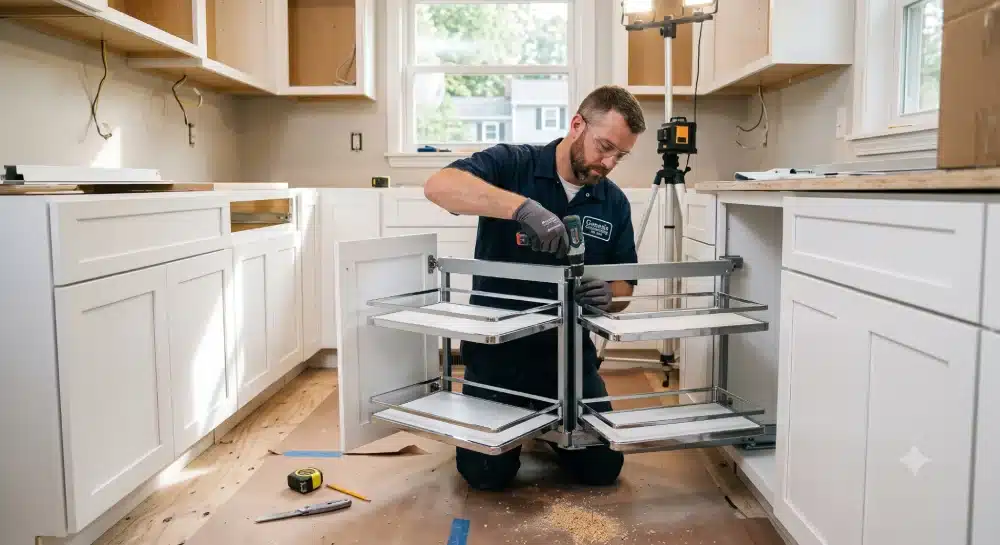
- Swing-Out Corner Organizers: Replace dark “blind corner” voids with 2-tier peanut-shaped or lazy susan trays that pivot completely out into the room.
- Vertical Sheet Pan Dividers: Store cutting boards, cookie sheets, and muffin tins vertically above the oven using thin tray dividers rather than stacking them horizontally.
- Ceiling-Height Upper Cabinets: Run 42-inch upper cabinets all the way to the ceiling, capping them with crown molding to store seasonal or infrequently used kitchen items.
- Under-Sink Pull-Out Trays: Install U-shaped sliding wire baskets around plumbing pipes to organize cleaning supplies without cluttering the sink floor.
- Integrated Appliance Garages: Hide toaster ovens, blenders, and coffee makers behind appliance garage doors to keep limited countertop space clear.
- Drawer Peg Systems: Insert adjustable wooden pegboard systems into deep drawers to keep plates, bowls, and cookware neatly anchored in place.
- Toe-Kick Drawers: Utilize the 4-inch dead space below your base cabinets by adding flat toe-kick drawers for baking sheets or pet bowls.
- Door-Mounted Spice & Lid Racks: Mount shallow metal wire racks to the inside of cabinet doors to keep pot lids and small spice jars organized.
How Do Pull-Out Drawers Compare to Traditional Shelf Cabinets in Small Kitchens?
Direct Answer: Full-extension pull-out drawers provide vastly superior accessibility and eliminate wasted back-of-cabinet space compared to fixed traditional shelves. Fixed shelves force homeowners to drop to their knees and unstack front items to reach things hidden in the back, whereas heavy-duty sliding drawers bring the entire cabinet contents out to you.
Data from the National Kitchen & Bath Association (NKBA) reveals that accessibility and functional storage layout are the top two drivers for residential kitchen renovations. During our design consultations in Rosedale and Perry Hall, we frequently point out how fixed shelving creates unused dead zones.
- Heavy-Duty Weight Capacities: Modern undermount drawer glides hold up to 75–100 pounds smoothly, making them ideal for heavy ceramic bakeware, slow cookers, and stand mixers.
- Ergonomic Advantages: Sliding drawers eliminate awkward bending and reaching into dark lower cabinets, making your kitchen safer and easier to navigate as you age.
How Can You Reclaim Dead Space in Corner Kitchen Cabinets?
Direct Answer: Reclaiming blind corner space requires replacing static shelving with specialized mechanical corner hardware, such as kidney-shaped lazy susans or articulated swing-out tray systems. These mechanisms pull hidden back-corner contents out into the room, reclaiming up to 35% of lost storage volume.
Corner Storage Mechanism Comparison
| Mechanism Type | Accessible Volume | Best Used For |
| Fixed L-Shaped Shelf | 30% (Deep back lost) | Rarely used items |
| Rotating Lazy Susan | 60% – 70% | Canned goods, jars |
| Articulated Swing-Out Trays | 80% – 85% | Pots, pans, bowls |
| Diagonal Corner Drawers | 75% – 80% | Utensils, linens |
In many traditional L-shaped or U-shaped kitchens in Towson and Parkville, the corner base cabinet becomes a dark “black hole” where plastic storage containers go to vanish.
- Articulated Blind Corner Pull-Outs: These multi-stage metal basket systems slide forward and swing out in one smooth motion, bringing items sitting in the far back corner directly to the front.
- Diagonal Corner Drawers: For custom kitchen remodeling layouts, diagonal corner drawers cut directly across the corner angle, offering deep 90-degree drawer storage without any revolving parts.
What Does It Cost to Add Custom Storage Inserts to Existing or New Cabinets?
Direct Answer: Adding professional storage inserts during a kitchen remodel generally costs between $150 and $800 per cabinet location, depending on hardware quality and mechanism complexity. Retrofitting basic aftermarket wire pull-outs costs less, while built-in solid hardwood pull-outs and heavy-duty blind corner systems sit at the top of the price range.
Average Storage Insert Cost Breakdown
| Storage Insert Type | Average Cost Installed (Labor & Hardware) |
| Roll-Out Base Shelf / Tray | $150 – $300 per tray |
| Slim Vertical Spice Pull-Out | $250 – $500 per unit |
| Blind Corner Swing-Out System | $450 – $850 per unit |
| Trash & Recycling Double Pull-Out | $200 – $450 per unit |
| Deep Drawer Peg Partition System | $100 – $250 per drawer |
Industry studies compiled by NARI (National Association of the Remodeling Industry) show that functional interior cabinet organization delivers high daily satisfaction scores for homeowners. When budgeting for your kitchen layout with our team, factor in these material costs:
- Hardware Engineering: Premium soft-close glides from manufacturers like Blum or Rev-A-Shelf prevent slamming and keep heavy drawer contents from shifting around.
- Custom vs. Semi-Custom Cabinets: Incorporating built-in storage organizers directly into factory semi-custom cabinetry is significantly more affordable than ordering retrofitted custom pieces later on.
- Licensing & Code Standards: Electrical outlets installed inside appliance garages or pull-out drawers must comply with National Electrical Code (NEC) safety standards, requiring a licensed master electrician under regulations set by the Maryland Home Improvement Commission (MHIC).
Do You Need a Baltimore County Building Permit for Kitchen Cabinet Upgrades?
Direct Answer: Replacing or reconfiguring kitchen cabinets in the exact same footprint does not require a building permit in Baltimore County. However, if your cabinet redesign involves removing walls, moving plumbing supply lines, or adding new electrical outlets, you must pull a residential permit through the county’s ePlans portal.
Even on compact kitchen projects, local regulations ensure construction safety. According to the Baltimore County Department of Permits, Approvals and Inspections:
- Cosmetic Replacements: Simply replacing old cabinets, installing new quartz countertops, or adding slide-out drawers requires zero permits.
- Layout Changes: Opening up a load-bearing wall or adding an island with electrical outlets requires structural, electrical, and building permits.
- Weather & Cabinet Integrity: Maryland’s humid summers and cold freeze-thaw winters mean kitchen materials must be built to withstand thermal expansion. Moisture-resistant plywood box construction outperforms cheap particle board when climate shifts hit homes in White Marsh and Nottingham.
Frequently Asked Questions About Small Kitchen Storage
1. What is the best way to store pots and pans in a small kitchen?
Deep full-extension base drawers equipped with adjustable divider pegs offer the easiest access for pots and lids, eliminating the need to stack items on deep open shelves.
2. Are pull-out pantries worth the investment in smaller layouts?
Yes, slim 6-inch to 12-inch vertical pull-out pantries utilize narrow spaces that would otherwise go to waste, providing quick dual-sided access to canned goods, spices, and oils.
3. How do I maximize upper cabinet space all the way to the ceiling?
Order 42-inch upper cabinets or stack smaller accent cabinets above standard 30-inch units. Use the top shelves for seasonal items, platters, or small appliances you only use occasionally.
4. Can I add roll-out trays to my existing kitchen cabinets?
Yes, master carpenters can retrofit wood or wire roll-out trays into existing cabinet frames, provided the doors open wide enough to clear the drawer slides.
5. What is a blind corner cabinet?
A blind corner cabinet is a lower cabinet where one section extends deep into a corner behind an adjacent cabinet, making half of the interior space difficult to reach without specialized swing-out hardware.
6. Where should I hide the trash and recycling bins in a small kitchen?
Install a dual-bin pull-out trash kit inside a 15-inch or 18-inch base cabinet near the sink. This keeps trash cans off the floor and out of valuable walkway space.
7. How do I keep small spice jars organized without cluttering counters?
Use a slim vertical pull-out rack next to the stove, or install an angled drawer insert that lays spice bottles flat in a shallow top drawer for easy reading.
8. Will adding custom cabinet organizers increase my home’s resale value?
Yes, high-functioning kitchens with custom storage solutions appeal strongly to home buyers in submarkets like Towson and Perry Hall, often helping homes sell faster during real estate inspections.
9. What is an appliance garage?
An appliance garage is an enclosed cabinet section sitting directly on the countertop equipped with a lift-up or tambour door, designed to keep small appliances plugged in but hidden from view.
10. How do I verify that my remodeling contractor is licensed in Maryland?
Always verify your contractor’s standing using the Maryland Department of Labor MHIC online portal. Genesis Contracting operates under active license MHIC #130227.
Ready to Transform Your Small Kitchen Space?
Don’t let a small footprint hold back your cooking experience. Whether you need custom cabinet storage, a complete kitchen remodeling upgrade, a bathroom remodeling transformation, or a full home addition, contact our team at Genesis Contracting today. We provide clear, itemized fixed bids and master craftsmanship for homeowners across Nottingham, Perry Hall, White Marsh, Rosedale, Parkville, and Towson.